- Learning how to set up the blog initially was very useful, and can be applied to many things.
- Initiating contact and networking with other readers who have experience within genres and subgenres was very useful and fun.
- Discovering Genre and Subgenre websites was useful, informative, and entertaining.
- Learning to use YouTube and other sources to watch and listen to author and book interviews online is wonderful.
Monday, June 24, 2013
While I am skeptical about Book Trailers, I am not skeptical nor ambivalent in regards to this learning exercise called "Be More Bookish." There are several elements of this program which very beneficial to any librarian delivering Readers' Advisory services.

Tuesday, June 18, 2013
The Great Follow-up
On Book Trailers
To be frank, I wouldn't trust book trailers any more than I would trust movie trailers...which is to say, not at all. A trailer is nothing more than a bit of hype created by advertising executives to sell something. The trailer takes edited bits and puts them together to make a mini-movie showing off all the alleged "best-parts" of the story so that the viewer or reader will feel comfortable parting with a bit of cash to see the whole thing. Frequently, in the case of a modern movie, the result is disappointment. I can only imagine that the same thing can happen with books.
I am a content afficianado. I want substance. I love author interviews on C-SPAN book notes which run more than ten minutes, and allow questions and answers from the audience about the material within the book. I have watched some of these recently, including Colum McCann's Transatlantic, and Ken Follett's historical sagas, as well as in-depth interviews on YouTube with Bernard Cornwell [Sharpe series] and Patrick O'Brian [Aubrey and Maturin Sea adventures]. These take more time to watch, but they provide much more information about the books that these authors have taken even more time to write. These reviews provide a very accurate depiction of what stories and facts are between the covers of their books.
On Book Trailers
To be frank, I wouldn't trust book trailers any more than I would trust movie trailers...which is to say, not at all. A trailer is nothing more than a bit of hype created by advertising executives to sell something. The trailer takes edited bits and puts them together to make a mini-movie showing off all the alleged "best-parts" of the story so that the viewer or reader will feel comfortable parting with a bit of cash to see the whole thing. Frequently, in the case of a modern movie, the result is disappointment. I can only imagine that the same thing can happen with books.
I am a content afficianado. I want substance. I love author interviews on C-SPAN book notes which run more than ten minutes, and allow questions and answers from the audience about the material within the book. I have watched some of these recently, including Colum McCann's Transatlantic, and Ken Follett's historical sagas, as well as in-depth interviews on YouTube with Bernard Cornwell [Sharpe series] and Patrick O'Brian [Aubrey and Maturin Sea adventures]. These take more time to watch, but they provide much more information about the books that these authors have taken even more time to write. These reviews provide a very accurate depiction of what stories and facts are between the covers of their books.
Thursday, June 13, 2013
WEEK 8- Final Assignment. I know that I am advised/ instructed to elaborate on two of the previous titles at length. However, I am such an avid reader of Nonfiction that I thought I would provide longer booktalks on two additional titles.
The HOT ZONE by Richard Preston, 614.57 P. [Subject: Infectious disease, epidemics, medicine].
IMHO this book is the penultimate in popular, narrative medical non-fiction writing. The opening chapters read in a similar way to the most gruesome material conceived by Stephen King or Dean R. Koontz--but with one startling difference. It is all too true. The events in the book all took place between 1967 and 1993 and began in central Africa. There is a disclaimer at the front of the book stating that the events contained therein are indeed true, but the incubation period of the Ebola and other Hemorrhagic Viruses are less than 24 days. It also states that there is no chance of these diseases spreading from the special bio-facilities in the Washington D.C. or Reston areas.
A few of the major characters in this book suffered and died from the notorious Ebola Zaire virus. Its source has been discovered to be Kittim cave in the province of Zaire, central Africa. It is a Hemorrhagic virus, which means that the interior tissues of the body melt into liquid and blood emerges from every pore and oriface of the body.
If someone with this disease sneezes in a room full of 100 people, 90 will perish within a short time. Even the Bubonic Plague was only 60 per cent lethal. Two people, in a highly contagious state, shut down an entire hospital for several weeks. The way these people died is too horiffic to read about before lunchtime.
We are all fortunate that this disease has not spread worldwide.
Provenance: How a Con Man and a Forger Rewrote the History of Modern Art. by Laney Salisbury, 364.162 S [Crime, forgery, art, Confidence schemes]
John Drewe is one of the most audacious con men who ever lived. His scheme was brilliant, his execution meticulous, his assistant was very gifted. Using his arts of persuasion and false philanthropy, Drewe squirmed his way into the archives of several art museums to create Provenance [written records] for pieces of non-existant artwork by renowned artists. He then had his expert art forger friend, John Myatt, create the piece of artwork, in the exact style and method of the said artist, which matched the false record. This artwork was then sold to the museum (at market prices) for exhibition. This process was repeated hundreds of times in museums in several locations.
This is the first part of the story. The second exciting portion of the book involves the apprehension and trial of Drewe and Myatt. Mr. Drewe's trial probably belongs in the Guinness Book of World Records. As a supremely confident Con Man, he felt obliged to defend himself in the courtroom. He did this in such a prolonged and eccentric manner that the judge presiding over the case exempted the jury from further duty for the remainder of their lives.
The kicker, if you will, is the aftermath. It seems that there are several museums throughout the world, whose collections consist entirely of Drewe/ Myatt forgeries. The museums in question do not dare reveal the truth, lest they become embarassed and scandalized by their presumption of the authenticity of their collections. This is one of those cases where truth is stranger than fiction. If someone fabricated a story such as this, it would be deemed highly improbable. This book is completely factual.
The HOT ZONE by Richard Preston, 614.57 P. [Subject: Infectious disease, epidemics, medicine].
IMHO this book is the penultimate in popular, narrative medical non-fiction writing. The opening chapters read in a similar way to the most gruesome material conceived by Stephen King or Dean R. Koontz--but with one startling difference. It is all too true. The events in the book all took place between 1967 and 1993 and began in central Africa. There is a disclaimer at the front of the book stating that the events contained therein are indeed true, but the incubation period of the Ebola and other Hemorrhagic Viruses are less than 24 days. It also states that there is no chance of these diseases spreading from the special bio-facilities in the Washington D.C. or Reston areas.
A few of the major characters in this book suffered and died from the notorious Ebola Zaire virus. Its source has been discovered to be Kittim cave in the province of Zaire, central Africa. It is a Hemorrhagic virus, which means that the interior tissues of the body melt into liquid and blood emerges from every pore and oriface of the body.
If someone with this disease sneezes in a room full of 100 people, 90 will perish within a short time. Even the Bubonic Plague was only 60 per cent lethal. Two people, in a highly contagious state, shut down an entire hospital for several weeks. The way these people died is too horiffic to read about before lunchtime.
We are all fortunate that this disease has not spread worldwide.
Provenance: How a Con Man and a Forger Rewrote the History of Modern Art. by Laney Salisbury, 364.162 S [Crime, forgery, art, Confidence schemes]
John Drewe is one of the most audacious con men who ever lived. His scheme was brilliant, his execution meticulous, his assistant was very gifted. Using his arts of persuasion and false philanthropy, Drewe squirmed his way into the archives of several art museums to create Provenance [written records] for pieces of non-existant artwork by renowned artists. He then had his expert art forger friend, John Myatt, create the piece of artwork, in the exact style and method of the said artist, which matched the false record. This artwork was then sold to the museum (at market prices) for exhibition. This process was repeated hundreds of times in museums in several locations.
This is the first part of the story. The second exciting portion of the book involves the apprehension and trial of Drewe and Myatt. Mr. Drewe's trial probably belongs in the Guinness Book of World Records. As a supremely confident Con Man, he felt obliged to defend himself in the courtroom. He did this in such a prolonged and eccentric manner that the judge presiding over the case exempted the jury from further duty for the remainder of their lives.
The kicker, if you will, is the aftermath. It seems that there are several museums throughout the world, whose collections consist entirely of Drewe/ Myatt forgeries. The museums in question do not dare reveal the truth, lest they become embarassed and scandalized by their presumption of the authenticity of their collections. This is one of those cases where truth is stranger than fiction. If someone fabricated a story such as this, it would be deemed highly improbable. This book is completely factual.
Wednesday, June 12, 2013
WEEK 8- Assignment Three-
BIOGRAPHY
The Bookseller of Kabul by Asne Sierstad Bio Khan
Fascinating account of a bookseller in a society which has almost declared war on literacy [Afghanistan]. His enemies have included both militant Communists and the Taliban. This is written by a woman journalist from Sweden, who wore a burqa for a few years in order to imbed herself into this dangerous society.
TRUE CRIME
The Devil's Rooming House by M. Williams Phelps 364.1523 P
Engrossing and terrifying tale of America's deadliest female serial killer. This story was the background legend for the play "Arsenic and Old Lace." This one is genuinely creepy.
MEDICINE
The Immortal Life of Henrietta Lacks By Rebecca Skloot 616.027S
Wonderful story with several appeal characteristics for readers. This narrative combines medical, social, political and local history into one of the most interesting and widely read works of non-fiction of the last several years. This is a good choice for someone who has yet to read a good work of narrative non-fiction, but is open to do so. Excellent for High School & College reading assignments.
HISTORY
Destiny of the Republic [President Garfield] by Candace Millard 917.099M
Illuminating story of the assassination attempt on President Garfield and its aftermath. It was not the assassin who killed Garfield. This is a great look at the social, medical, political history of that era. One can only wonder what our country would have looked like and how things might be different had President Garfield survived his ordeal.
BIOGRAPHY
The Bookseller of Kabul by Asne Sierstad Bio Khan
Fascinating account of a bookseller in a society which has almost declared war on literacy [Afghanistan]. His enemies have included both militant Communists and the Taliban. This is written by a woman journalist from Sweden, who wore a burqa for a few years in order to imbed herself into this dangerous society.
TRUE CRIME
The Devil's Rooming House by M. Williams Phelps 364.1523 P
Engrossing and terrifying tale of America's deadliest female serial killer. This story was the background legend for the play "Arsenic and Old Lace." This one is genuinely creepy.
MEDICINE
The Immortal Life of Henrietta Lacks By Rebecca Skloot 616.027S
Wonderful story with several appeal characteristics for readers. This narrative combines medical, social, political and local history into one of the most interesting and widely read works of non-fiction of the last several years. This is a good choice for someone who has yet to read a good work of narrative non-fiction, but is open to do so. Excellent for High School & College reading assignments.
HISTORY
Destiny of the Republic [President Garfield] by Candace Millard 917.099M
Illuminating story of the assassination attempt on President Garfield and its aftermath. It was not the assassin who killed Garfield. This is a great look at the social, medical, political history of that era. One can only wonder what our country would have looked like and how things might be different had President Garfield survived his ordeal.
WEEK 8-Assignment Two
I watched the wonderful video on Non-Fiction Reader's Advisory this morning. It runs less than 10 minutes, but is packed with good information. I like the fact that Non-fiction is actually arranged in such a way as to make Reader's Advisory easier in many respects than Fiction is. Fiction is arranged solely by author, with little concern for appeal factors.
I watched the wonderful video on Non-Fiction Reader's Advisory this morning. It runs less than 10 minutes, but is packed with good information. I like the fact that Non-fiction is actually arranged in such a way as to make Reader's Advisory easier in many respects than Fiction is. Fiction is arranged solely by author, with little concern for appeal factors.
Monday, June 10, 2013
WEEK EIGHT- Nonfiction.
I found the two articles discussing Non-fiction Readers' Advisory rather amusing. What is left out of the discussion is the general gender differences in reading choices. When I became an avid reader (post I Can Read materials) I immediately leapt into Non-fiction books on vehicles [Rockets, Planes, trains, ships, submarines, tanks, automobiles, equipment, Civil War, WW II, etc.) before i tried spooky short stories [bought my first book of Edgar Alan Poe at age 12] and finally hit upon Hero sagas and the Hobbit soon afterwards. I wanted to learn stuff in a hurry, and novels didn't do that for me. I had to learn to slow down in order to appreciate novels, just as a young person must learn to appreciate art and poetry.
Novels or long stories took too long to unfold, and as a young man-child I was too impatient for all of that. Junior High [or Middle School as it is called now] changed my reading habits. So did adolescence.
Guys built things in the 60's and 70's--models, go-carts, tree-houses, etc. and fixed things like bikes or musical instruments; or dreamt of exploring or travelling around the world. I also loved drawing. We read stuff that reflected out interests. Most of what I borrowed from the library until High School was non-fiction. I think this is pretty typical for male borrowers and readers. I always dug maps and diagrams. I still do. Most non-fiction was written by men in those days....that is not the case today.
For this reason it is important to find out up front if a reader wants fiction or narrative non-fiction. There are some people who specifically want one or the other. If a good narrative is involved, there can be a great amount of cross-over. Some fiction authors, such as Michener, Rutherford, Clancy--are barely fictional. Others like Follett, Higgins, MacLean, Cussler, Reilly, Fleming, Furst--provide information but loosely, in a more typical fictional format.
It is important to find out what kind of a) experience the reader is looking for, b) style of the author, c) content density and d) pacing of the story.
As both of the authors of the articles state, it is most important to listen to the reader and respond appropriately to their interests and expectations. We mustn't assume that they are looking for a novel any more than we assume an older veteran only wants a unit history from WW II.
"So what did you think of the Red Badge of Courage? Did it give you the feeling that I had actually been there?"
-Stephen Crane to William Randolph Hearst
I found the two articles discussing Non-fiction Readers' Advisory rather amusing. What is left out of the discussion is the general gender differences in reading choices. When I became an avid reader (post I Can Read materials) I immediately leapt into Non-fiction books on vehicles [Rockets, Planes, trains, ships, submarines, tanks, automobiles, equipment, Civil War, WW II, etc.) before i tried spooky short stories [bought my first book of Edgar Alan Poe at age 12] and finally hit upon Hero sagas and the Hobbit soon afterwards. I wanted to learn stuff in a hurry, and novels didn't do that for me. I had to learn to slow down in order to appreciate novels, just as a young person must learn to appreciate art and poetry.
Novels or long stories took too long to unfold, and as a young man-child I was too impatient for all of that. Junior High [or Middle School as it is called now] changed my reading habits. So did adolescence.
Guys built things in the 60's and 70's--models, go-carts, tree-houses, etc. and fixed things like bikes or musical instruments; or dreamt of exploring or travelling around the world. I also loved drawing. We read stuff that reflected out interests. Most of what I borrowed from the library until High School was non-fiction. I think this is pretty typical for male borrowers and readers. I always dug maps and diagrams. I still do. Most non-fiction was written by men in those days....that is not the case today.
For this reason it is important to find out up front if a reader wants fiction or narrative non-fiction. There are some people who specifically want one or the other. If a good narrative is involved, there can be a great amount of cross-over. Some fiction authors, such as Michener, Rutherford, Clancy--are barely fictional. Others like Follett, Higgins, MacLean, Cussler, Reilly, Fleming, Furst--provide information but loosely, in a more typical fictional format.
It is important to find out what kind of a) experience the reader is looking for, b) style of the author, c) content density and d) pacing of the story.
As both of the authors of the articles state, it is most important to listen to the reader and respond appropriately to their interests and expectations. We mustn't assume that they are looking for a novel any more than we assume an older veteran only wants a unit history from WW II.
"So what did you think of the Red Badge of Courage? Did it give you the feeling that I had actually been there?"
-Stephen Crane to William Randolph Hearst
Week Seven- Assignment 3 Pt. 2 Ya blogfollowing
Forever Young Adult is the other site I have been monitoring. In its own description it calls itself a site "that is a little less Y and a bit more A". It also calls itself a "girlie counterpart to the Badass Digest." This makes me ask an important question--"What is the ratio of women young adult readers to men?" My perception has been reinforced that much of YA is chicklit.
This site has immediate links to Netflix, Book Reviews and Book Clubs. There is also a jargon dictionary, that might help if evthg wsnt so abbvt tht it was hd to rd.
As I am an oldster, not into text language, and a devotee of traditional spelling and expanded vocabulary, this doesn't really work for me.
I am getting close to answering my own question from paragraph one. Reading through a few of the Publisher's YA websites, I see much more content to appeal to young ladies than young men. I have visited Harper Teen, Teens/Penguin and Little-Brown Teen, and most of these have the look of YA Romance, paranormal and otherwise. The paranormal part seems to be longest recent trend. This is evident on the WEB as well as on our YA shelves. Is this The Genre that wouldn't die ???
Forever Young Adult is the other site I have been monitoring. In its own description it calls itself a site "that is a little less Y and a bit more A". It also calls itself a "girlie counterpart to the Badass Digest." This makes me ask an important question--"What is the ratio of women young adult readers to men?" My perception has been reinforced that much of YA is chicklit.
This site has immediate links to Netflix, Book Reviews and Book Clubs. There is also a jargon dictionary, that might help if evthg wsnt so abbvt tht it was hd to rd.
As I am an oldster, not into text language, and a devotee of traditional spelling and expanded vocabulary, this doesn't really work for me.
I am getting close to answering my own question from paragraph one. Reading through a few of the Publisher's YA websites, I see much more content to appeal to young ladies than young men. I have visited Harper Teen, Teens/Penguin and Little-Brown Teen, and most of these have the look of YA Romance, paranormal and otherwise. The paranormal part seems to be longest recent trend. This is evident on the WEB as well as on our YA shelves. Is this The Genre that wouldn't die ???
Week Seven- Assignment 3 YA blogfollowing
Following CassandraClare's Tumblr. This is a Professional Author's site, discerned instantly by the high quality photos and graphics. I have not read the Shadow Hunter series of books, but a great deal of the content can be gleaned from perusing the blog. This looks like a paranormal romantic fantasy series, with angels, half-angels, demi-gods and humans thrown into the mix of major characters.
Everything about this page is high quality, from the photos and text to the other graphics which include Manga depictions of the characters. I would imagine that this is a very popular site among Young Adults, who are looking for more background and supplemental material for the books they are reading.
Following CassandraClare's Tumblr. This is a Professional Author's site, discerned instantly by the high quality photos and graphics. I have not read the Shadow Hunter series of books, but a great deal of the content can be gleaned from perusing the blog. This looks like a paranormal romantic fantasy series, with angels, half-angels, demi-gods and humans thrown into the mix of major characters.
Everything about this page is high quality, from the photos and text to the other graphics which include Manga depictions of the characters. I would imagine that this is a very popular site among Young Adults, who are looking for more background and supplemental material for the books they are reading.
Friday, June 7, 2013
Week Seven- Assignment 3 I Love you Blog, YA, YA, YA
After perusing the possibilities, I have opted to follow the YA blogs Cassandra Clare's Tumblr and Forever Young Adult. These look to be sites which are more content-rich than some of the others. I am sure this will be interesting, especially since the genre of YA was practically non-existant when I was 13-14; I actually began reading Adult novels and short stories by age 12. I was labeled a "discipline problem" in fifth grade by a teacher who was most like "Miss Haversham" in Dickens. I was actually bored to tears, and was finally given affirmation and encouragement by a brilliant and creative 6th grade teacher-- who demonstrated that I was reading materials at twice my grade level, and those for fun.
Thus, I was really a part of that older generation which skipped Young Adult entirely, and went from "Juvenile" Fiction and non-fiction, directly into Adult materials.
After perusing the possibilities, I have opted to follow the YA blogs Cassandra Clare's Tumblr and Forever Young Adult. These look to be sites which are more content-rich than some of the others. I am sure this will be interesting, especially since the genre of YA was practically non-existant when I was 13-14; I actually began reading Adult novels and short stories by age 12. I was labeled a "discipline problem" in fifth grade by a teacher who was most like "Miss Haversham" in Dickens. I was actually bored to tears, and was finally given affirmation and encouragement by a brilliant and creative 6th grade teacher-- who demonstrated that I was reading materials at twice my grade level, and those for fun.
Thus, I was really a part of that older generation which skipped Young Adult entirely, and went from "Juvenile" Fiction and non-fiction, directly into Adult materials.
Tuesday, June 4, 2013
WEEK SEVEN- NOT JUST FOR TEENS
Assignment 2 -Who is Reading Young Adult ?
The articles chosen for our assignment are fascinating. I had no idea that 55 per cent of those people reading YA were over 18 years of age, and that the largest group is ages 30-44. This makes me want to investigate further. I am wondering if the Hunger Games and Twilight phenomenon account for much of this-- or if there is another factor, such as easier material, vocabulary and plot? For instance, there is a very strong argument that there has been a severe decrease in American reading vocabulary over the last 40 years (the Elephant in the living room). Back in 1999 the American Publishers Assn. attributed this to 14 year olds' reliance on TV and Internet over text-rich books, newspapers and magazines between 1949 and 1999.
One way to look at this is to compare Nancy Drew and Hardy Boys novels written between 1926 and 2000. These books were always aimed at the same audience, but take a look at the difference in the texts and vocabulary !
The other side of the argument might be that writers feel they have more freedom to experiment with storyline and topic than mass-marketed adult fiction, which is almost always formulaic. This seems to be especially true with Science Fiction and Fantasy novels, where some of the best writers in those genres seem to be writing for Young Adults. These are genres which also seem to have a high WOW factor for readers (Mind expanding, new possibilities, and surprise).
IMHO, I sincerely hope that there will be more "paranormal fatigue" if such fatigue includes zombies, vampires, werewolves, etc. I think writers have taken this genre about as far as it can go. This phenomenon reminds me of the old network television shows. If a police or hospital show was a success one season, every single network had a wannabe program on prime time the next season. Even teens eventually realize that this is pure commercial marketing and become jaded about the product. They see that the superficial elements have trumped the content.
Assignment 2 -Who is Reading Young Adult ?
The articles chosen for our assignment are fascinating. I had no idea that 55 per cent of those people reading YA were over 18 years of age, and that the largest group is ages 30-44. This makes me want to investigate further. I am wondering if the Hunger Games and Twilight phenomenon account for much of this-- or if there is another factor, such as easier material, vocabulary and plot? For instance, there is a very strong argument that there has been a severe decrease in American reading vocabulary over the last 40 years (the Elephant in the living room). Back in 1999 the American Publishers Assn. attributed this to 14 year olds' reliance on TV and Internet over text-rich books, newspapers and magazines between 1949 and 1999.
One way to look at this is to compare Nancy Drew and Hardy Boys novels written between 1926 and 2000. These books were always aimed at the same audience, but take a look at the difference in the texts and vocabulary !
The other side of the argument might be that writers feel they have more freedom to experiment with storyline and topic than mass-marketed adult fiction, which is almost always formulaic. This seems to be especially true with Science Fiction and Fantasy novels, where some of the best writers in those genres seem to be writing for Young Adults. These are genres which also seem to have a high WOW factor for readers (Mind expanding, new possibilities, and surprise).
IMHO, I sincerely hope that there will be more "paranormal fatigue" if such fatigue includes zombies, vampires, werewolves, etc. I think writers have taken this genre about as far as it can go. This phenomenon reminds me of the old network television shows. If a police or hospital show was a success one season, every single network had a wannabe program on prime time the next season. Even teens eventually realize that this is pure commercial marketing and become jaded about the product. They see that the superficial elements have trumped the content.
Monday, June 3, 2013
WEEK SEVEN- NOT JUST FOR TEENS
Assignment 1- What to Read Next
While I have not had a request for read-alikes for the Hunger Games lately, I know there will be interest generated in this title and its kind when the New Movie debuts. I found many good options from the What to Read Next link, and Scott Westerfield is just one good lead.
I like the way the read-alikes are broken down into subgenres like, Environmental Disaster: with the selections by Terry Pratchett and Susan Beth Pfeffer,
or Survival in a Dystopian or Post-Apocalyptic World, (but I would include Stirling's Dies the Fire in this group, which is a novel very much like the television programme Revolution. In that world electricity no longer works, and everyone is thrust into a pre-industrial lifestyle and thus forced into survival mode.
or the wonderful world of Dystopian SF [my favorite] with the now-classic Feed by M.T. Anderson; House of the Scorpion by Nancy Farmer; Ender's Game by Card; and Epic by Kostick. These are all GREAT modern SF classics. These are also wonderful "starter" SF titles to give to people who want to, or are assigned to read an SF title, but are reluctant to do so.
All of these are wonderful choices for readers who have digested the Hunger Games books and are yearning for more....
Assignment 1- What to Read Next
While I have not had a request for read-alikes for the Hunger Games lately, I know there will be interest generated in this title and its kind when the New Movie debuts. I found many good options from the What to Read Next link, and Scott Westerfield is just one good lead.
I like the way the read-alikes are broken down into subgenres like, Environmental Disaster: with the selections by Terry Pratchett and Susan Beth Pfeffer,
or Survival in a Dystopian or Post-Apocalyptic World, (but I would include Stirling's Dies the Fire in this group, which is a novel very much like the television programme Revolution. In that world electricity no longer works, and everyone is thrust into a pre-industrial lifestyle and thus forced into survival mode.
or the wonderful world of Dystopian SF [my favorite] with the now-classic Feed by M.T. Anderson; House of the Scorpion by Nancy Farmer; Ender's Game by Card; and Epic by Kostick. These are all GREAT modern SF classics. These are also wonderful "starter" SF titles to give to people who want to, or are assigned to read an SF title, but are reluctant to do so.
All of these are wonderful choices for readers who have digested the Hunger Games books and are yearning for more....
Thursday, May 30, 2013
Week 6- SubGenres
There are several subgenres which are requested in the library setting, and I have investigated three of them.
1) Romantic [or Spicy] Westerns
Information on this subgenre can be found at westernauthors.com/spicy.htm
I found this site, like the others in this set, by using Google. Wendi Darlin, Sandy Sullivan, and Beth Williamson are three authors who write in this genre. The appeal of these books is that they combine the elements of the Western and the Romance novels.
2) Roman era Mysteries
This subgenre also requires poking around a bit to find good info. Google is essential, and like all of the subgenres here, Goodreads always yields results. The major authors in this subgenre are Ruth Browne, John Maddox Roberts, and Steven Saylor.
The appeal here is for folks who liked Spartacus, I Claudius, and other Roman Novels, but also enjoy the element of mystery and detection added.
3) Detective Science Fiction
This subgenre can only be located through Google and Science Fiction websites. There are several lists floating around with groupings of the top 10 or 25 of these ever written.
Philip K. Dick- Do Androids Dream of Electric Sheep [basis for Bladerunner]; Douglas Adams- Dirk Gently's Holistic Detective Agency, and Isaac Asimov's Caves of Steel. Of course, the appeal here is for detective or crime investigation stories which take place in the future, in outer space, or using technology which does not yet exist. [i.e. the need to track a criminal to another galaxy through hyperspace, members of criminal families with microchips implanted in their brains for perpetual tracking purposes, etc. etc.]
OHTER POSSIBLE GENRE MASH-UPS might include:
1) Detective Romance
2) Science Fiction Humor
3) Science Fiction Thriller
There are several subgenres which are requested in the library setting, and I have investigated three of them.
1) Romantic [or Spicy] Westerns
Information on this subgenre can be found at westernauthors.com/spicy.htm
I found this site, like the others in this set, by using Google. Wendi Darlin, Sandy Sullivan, and Beth Williamson are three authors who write in this genre. The appeal of these books is that they combine the elements of the Western and the Romance novels.
2) Roman era Mysteries
This subgenre also requires poking around a bit to find good info. Google is essential, and like all of the subgenres here, Goodreads always yields results. The major authors in this subgenre are Ruth Browne, John Maddox Roberts, and Steven Saylor.
The appeal here is for folks who liked Spartacus, I Claudius, and other Roman Novels, but also enjoy the element of mystery and detection added.
3) Detective Science Fiction
This subgenre can only be located through Google and Science Fiction websites. There are several lists floating around with groupings of the top 10 or 25 of these ever written.
Philip K. Dick- Do Androids Dream of Electric Sheep [basis for Bladerunner]; Douglas Adams- Dirk Gently's Holistic Detective Agency, and Isaac Asimov's Caves of Steel. Of course, the appeal here is for detective or crime investigation stories which take place in the future, in outer space, or using technology which does not yet exist. [i.e. the need to track a criminal to another galaxy through hyperspace, members of criminal families with microchips implanted in their brains for perpetual tracking purposes, etc. etc.]
OHTER POSSIBLE GENRE MASH-UPS might include:
1) Detective Romance
2) Science Fiction Humor
3) Science Fiction Thriller
Wednesday, May 29, 2013
Week 6- Assignment Two
I have issues with Prezi Link's genre flowchart. I disagree with Alex Herzberg's grouping whereby Fantasy is depicted as a subgenre of Science Fiction. I am sure there are other folks who have no problem with his model--but I think this is fundamentally incorrect in the scheme of World literature.
Fantasy is a very very old genre which finds its roots in Mythological tales. IMHO it was a very early manifestation of Adventure and Romance (happy ending) which can technically be found in the works of Dante, Rabelais, Faust, etc. long before the 18th century. In contrast, Science Fiction is a very new genre, even if one considers Mary Shelley's Frankenstein to be the earliest work in that group. I feel strongly that if one looks carefully at the structure, elements and plotting of Fantasy novels--one will find more in common with ancient and medieval literatures than with "Scientific Fiction".
I blame American publishers for lumping Fantasy with Science Fiction. American business/ Yankee realistis of the 19th and 20th century have had little taste or respect for Fantasy novels. They never knew where to put them. This has also, sadly, been true of some librarians. When I first began working for the library in the mid-1970's, The Lord of the Rings was found in YA, SF, J and Adult fiction, at least FOUR different locations. People didn't know what to do with Tolkien. Many still don't know what to do with Bradbury, or Michael Ende, Leguin, Jordan, Eddings, et al. How can you place some of these novels in the Science Fiction genre, when there is little or no technology whatsoever?
-Monty Phair
Fantasy is a very very old genre which finds its roots in Mythological tales. IMHO it was a very early manifestation of Adventure and Romance (happy ending) which can technically be found in the works of Dante, Rabelais, Faust, etc. long before the 18th century. In contrast, Science Fiction is a very new genre, even if one considers Mary Shelley's Frankenstein to be the earliest work in that group. I feel strongly that if one looks carefully at the structure, elements and plotting of Fantasy novels--one will find more in common with ancient and medieval literatures than with "Scientific Fiction".
I blame American publishers for lumping Fantasy with Science Fiction. American business/ Yankee realistis of the 19th and 20th century have had little taste or respect for Fantasy novels. They never knew where to put them. This has also, sadly, been true of some librarians. When I first began working for the library in the mid-1970's, The Lord of the Rings was found in YA, SF, J and Adult fiction, at least FOUR different locations. People didn't know what to do with Tolkien. Many still don't know what to do with Bradbury, or Michael Ende, Leguin, Jordan, Eddings, et al. How can you place some of these novels in the Science Fiction genre, when there is little or no technology whatsoever?
-Monty Phair
Tuesday, May 28, 2013
Week 6- Assignment one
The SF genre website Locus has several wonderful features which demonstrate some of the the multiple appeal factors of Science Ficiton. I will highlight three of them:
1) There is immediate access to a superb review of the new SF movie Star Trek into Darkness, written by Gary Westfall. Film is a huge aspect of SF.
2) There are links to each and every major award category given for Science Fiction literature. Many people unfamiliar with the genre, have no idea of where to begin. The award winning titles are excellent starting points.
3) There are also links (following some of the newer reviews) to the major SF genre periodicals. Readers who enjoy short stories or novellas, or who would prefer to approach SF in smaller doses, might choose to begin by reading a short story from one of these periodicals, rather than tackling an entire novel.
These elements, joined with reviews of some of the newest SF titles, makes Locus an excellent genre site.
-Monty Phair
1) There is immediate access to a superb review of the new SF movie Star Trek into Darkness, written by Gary Westfall. Film is a huge aspect of SF.
2) There are links to each and every major award category given for Science Fiction literature. Many people unfamiliar with the genre, have no idea of where to begin. The award winning titles are excellent starting points.
3) There are also links (following some of the newer reviews) to the major SF genre periodicals. Readers who enjoy short stories or novellas, or who would prefer to approach SF in smaller doses, might choose to begin by reading a short story from one of these periodicals, rather than tackling an entire novel.
These elements, joined with reviews of some of the newest SF titles, makes Locus an excellent genre site.
-Monty Phair
Wednesday, May 22, 2013
Week Five- Assignment 3
After perusing the top 25 anticipated titles of 2013 on the Earlybird site, I found two which look very promising. The first is Ocean at the End of the Lane, by Neil Gaiman. I have read a few of Gaiman's books, and I enjoy the atmosphere, the writing style, and the elements of myth, memory, and childhood which are evoked in many of his books.
Another title which looks very interesting is the Historical fiction title Transatlantic by Colum McCann. This book seems to have several interesting appeal factors: it is a triptych of major transatlantic historical events from the 19th and 20th centuries; the motivations of people who travelled across the Atlantic, and the different experiences of making the crossing between 1840 and 1998, and how the development of transportation and technology helped to "shrink the world" and compress time for the average person.
-Monty Phair
After perusing the top 25 anticipated titles of 2013 on the Earlybird site, I found two which look very promising. The first is Ocean at the End of the Lane, by Neil Gaiman. I have read a few of Gaiman's books, and I enjoy the atmosphere, the writing style, and the elements of myth, memory, and childhood which are evoked in many of his books.
Another title which looks very interesting is the Historical fiction title Transatlantic by Colum McCann. This book seems to have several interesting appeal factors: it is a triptych of major transatlantic historical events from the 19th and 20th centuries; the motivations of people who travelled across the Atlantic, and the different experiences of making the crossing between 1840 and 1998, and how the development of transportation and technology helped to "shrink the world" and compress time for the average person.
-Monty Phair
Tuesday, May 21, 2013
Week Five-Assignment 2
Some of the results from the CATONSVILLE Top 25 are not surprising, others are a bit...
1 Private London/ Patterson
2 Gorie Girl: A Novel/ Flynn
3 The Forgotten/ Baldacci
4 Alex Cross: Run/ Patterson
5 Merry Christmas, Alex Cross/ Patterson
6 Casual Vacancy / Rowling
7 Fliigh Behavior/ Kingsolver
8 Notorious Nineteen/ Evanovich
9 NYPD Red/ Patterson
10 The Perfect Hope/ Roberts
11 Six Years/ Coben
12 Secrets from the Past/ Bradford
13 Diary of a Wimpy Kid: The Third Wheel/ Kinney
14 Dream Eyes/ Krantz
15 Private Berlin/ Patterson
16 A Wanted Man: A Jack Reachers novel/ Child
17 Mad River/ Sandford, John
18 Guilt: An Alex Delaware novel/ Kellerman, Jonathan
19 The Storyteller/ Picoult
20 Black Box/ Connelly, Michael
21 Bone Bed/ Cornwell
22 Last Man/ Flynn, Vince
23 Week in Winter/ Binchy, Maeve
24 Low Pressure/ Brown. Sandra
25 Daddy's Gone a Hunting/ Clark, Mary Higgins
-Monty Phair
Some of the results from the CATONSVILLE Top 25 are not surprising, others are a bit...
1 Private London/ Patterson
2 Gorie Girl: A Novel/ Flynn
3 The Forgotten/ Baldacci
4 Alex Cross: Run/ Patterson
5 Merry Christmas, Alex Cross/ Patterson
6 Casual Vacancy / Rowling
7 Fliigh Behavior/ Kingsolver
8 Notorious Nineteen/ Evanovich
9 NYPD Red/ Patterson
10 The Perfect Hope/ Roberts
11 Six Years/ Coben
12 Secrets from the Past/ Bradford
13 Diary of a Wimpy Kid: The Third Wheel/ Kinney
14 Dream Eyes/ Krantz
15 Private Berlin/ Patterson
16 A Wanted Man: A Jack Reachers novel/ Child
17 Mad River/ Sandford, John
18 Guilt: An Alex Delaware novel/ Kellerman, Jonathan
19 The Storyteller/ Picoult
20 Black Box/ Connelly, Michael
21 Bone Bed/ Cornwell
22 Last Man/ Flynn, Vince
23 Week in Winter/ Binchy, Maeve
24 Low Pressure/ Brown. Sandra
25 Daddy's Gone a Hunting/ Clark, Mary Higgins
-Monty Phair
Monday, May 20, 2013
Week 5 Assignment 1-
I am truly happy with my close following of C-SPAN Booknotes and Book TV--this source includes many of the same new NF books that one finds on Early Word, but goes even further. This weekend I happened to catch an interview with Temple Grandin--a fascinating woman and author of books on topics ranging from Autism to the Treatment of Animals. On Saturday morning there was a recorded talk from Washington, D.C. earlier this year on "Autism across the Spectrum", which was very interesting on brain development and perception, and the range of behaviors which are sometimes classified as autism or asperger's syndromes. Grandin related her own experiences with school and jobs over the years, and her personal discoveries about the elusive condition known as Autism. Her talk made me want to read her book, on a subject I probably would have otherwise avoided.
Book TV is a wonderful tool for discovering New Non-fiction titles with multiple Appeal Factors.
-Monty Phair
I am truly happy with my close following of C-SPAN Booknotes and Book TV--this source includes many of the same new NF books that one finds on Early Word, but goes even further. This weekend I happened to catch an interview with Temple Grandin--a fascinating woman and author of books on topics ranging from Autism to the Treatment of Animals. On Saturday morning there was a recorded talk from Washington, D.C. earlier this year on "Autism across the Spectrum", which was very interesting on brain development and perception, and the range of behaviors which are sometimes classified as autism or asperger's syndromes. Grandin related her own experiences with school and jobs over the years, and her personal discoveries about the elusive condition known as Autism. Her talk made me want to read her book, on a subject I probably would have otherwise avoided.
Book TV is a wonderful tool for discovering New Non-fiction titles with multiple Appeal Factors.
-Monty Phair
Tuesday, May 14, 2013
Appeal Factors revisited
Group Exercise- Appeal Factors.
Today at the Catonsville Library, Zeke White and I introduced the topics of "The RA Conversation" and all of the aspects of Roving Readers Advisory work. We had most of the Fulltime and half of the P/T staff bring their recent annotations and personal "Patron Description" to the meeting with them.
we presented the concepts of tone [light, conversational, narrative, etc], major appeal [Is the story Plot driven?, character driven?, or is the setting and mood more important?], and key features or elements [such as humor, travel, appealing characters who show up in a series, style of writing, etc.]
Each participant worked with a team member to discuss their personal reading preferences, at least two annotations, and best practices when interviewing customers for Reader's Advisory work. At least a dozen librarians participated in this session today, and all found the experience quite rewarding. We also discussed the various tools which can be used to locate books and materials in genres "outside of our comfort zones and frame of reference."
-Monty Phair (CA)
Today at the Catonsville Library, Zeke White and I introduced the topics of "The RA Conversation" and all of the aspects of Roving Readers Advisory work. We had most of the Fulltime and half of the P/T staff bring their recent annotations and personal "Patron Description" to the meeting with them.
we presented the concepts of tone [light, conversational, narrative, etc], major appeal [Is the story Plot driven?, character driven?, or is the setting and mood more important?], and key features or elements [such as humor, travel, appealing characters who show up in a series, style of writing, etc.]
Each participant worked with a team member to discuss their personal reading preferences, at least two annotations, and best practices when interviewing customers for Reader's Advisory work. At least a dozen librarians participated in this session today, and all found the experience quite rewarding. We also discussed the various tools which can be used to locate books and materials in genres "outside of our comfort zones and frame of reference."
-Monty Phair (CA)
Monday, May 13, 2013
Week 4- Building Base Knowledge
I have been subscribed to Goodreads.com for about a year. I presently have 68 books listed, and these are arranged on 14 different bookshelves. I have a few friends who share their favorite reads with me, and vice-versa.
My latest addition was the book the Enchanted Wanderer by N.S. Leskov, a rather obscure Russian 19th Century short story writer. His obscurity may have ended due to this recent translation by Pevear and Volokhonsky, who have managed to decipher the interior puns, and colloquial Russian phrases & slang of the era, and translate these magical stories into delightful modern English. The stories are fantastic, magical, full of folklore and legend, eccentric characters and interesting situations.
I will soon be adding The Lady at the O.K. Corral: The True Story of Josephine Marcus Earp, by Ann Kirschner, and The War of 1812: Writings from America's Second War of Independence [Library of America, 2013].
Before subscribing to Goodreads, I kept a LENGTHY paper record in several small notebooks listing every title have read since 1982. The electronic list is less cumbersome, and is easier to recall in many cases, when my memory will not suffice. I strongly recommend that dedicated readers try Goodreads for this purpose.
-Monty Phair
My latest addition was the book the Enchanted Wanderer by N.S. Leskov, a rather obscure Russian 19th Century short story writer. His obscurity may have ended due to this recent translation by Pevear and Volokhonsky, who have managed to decipher the interior puns, and colloquial Russian phrases & slang of the era, and translate these magical stories into delightful modern English. The stories are fantastic, magical, full of folklore and legend, eccentric characters and interesting situations.
I will soon be adding The Lady at the O.K. Corral: The True Story of Josephine Marcus Earp, by Ann Kirschner, and The War of 1812: Writings from America's Second War of Independence [Library of America, 2013].
Before subscribing to Goodreads, I kept a LENGTHY paper record in several small notebooks listing every title have read since 1982. The electronic list is less cumbersome, and is easier to recall in many cases, when my memory will not suffice. I strongly recommend that dedicated readers try Goodreads for this purpose.
-Monty Phair
Tuesday, May 7, 2013
Be More Bookish Week 3: Activities
Conversation 1
Based on the information provided by the reader who had finished Eat Pray Love by Elizabeth Gilbert I would feel comfortable recommending Travels in Siberia by Ian Frazier. Yes, of course there are gender differences, but most of the same appeal factors: Interesting narrator, description of country, inner thoughts and reflections are described, and there is a good bit of humor too.
If the reader would prefer a female narrator, I would recommend Castles, Follies & Four Leaf Clovers by Rosamund Burton. The setting for this book is central Ireland, but also includes many of the same appeal factors. (and even more humor).
Conversation 2
This reader would like Vampire stories, but without the Teen Love story element. This person might want to try novels by Anne Rice, the Night Tracker series by Cheyenne McRay, the Carpathian series by Christine Feehan, and even Jim Butcher's Harry Dresden in the book, Changes. All are action-packed vampire stories with interesting adult characters. This genre has really exploded in the last few years, and there are several authors and sub-genres to choose from, including a recent one called Abraham Lincoln: Vampire Hunter., by Seth Grahame-Smith.
Conversation 3
The person who read River of Doubt would probably find any non-fiction title with action and suspense to their liking. I would recommend the Devil's Rooming House by M. William Phelps. This book is about one of America's most dangerous female serial killers, and the basis for the play and the novel "Arsenic and Old Lace." Another very good title is Destiny of the Republic by Candace Millard, the true story of the assasination attempt on President Garfield, and what really caused his death. (It was not from the assassin's bullet).
-Monty Phair
Monday, May 6, 2013
This week I have visited Stoddard's Palm Garden, the blog created by co-worker and friend Bryce Rumbles. Bryce reads lots of interesting stuff, and this includes history and Historical Fiction. I noticed that he has included Ken Follett's Pillars of the Earth on his blog this week. I am a great fan of Follett, a gifted writer who refuses to be pigeon-holed into one particular genre. Follett is as adept in writing Historical Fiction as he is with suspense, espionage, and thriller. Pillars of the Earth has multiple interest points including Medieval British History and social life, architecture, and family saga.
At this time, I am reading Dissident for Life: Alexander Ogorodnikov and the Struggle for Religious Freedom in Russia, by Koenraad De Wolf. Dissident is not merely a memoir of a pivotal and courageous non-violent Christian protester, but also a chronicle of Soviet repression against ALL people of faith in the former Soviet Union since 1917. The struggles of Armenians, Lithuanians, Ukrainians, Siberians, Jews and other groups are also included in this tremendous work by Belgian journalist De Wolf. It is also de facto one of the most readable accounts of the events leading directly to the collapse of the Soviet Union in 1989-1991. This account looks at the religious factors which contributed to that collapse along with the economic, social and political ones. This is an important book for anyone interested in these topics.
At the other end of the biographical spectrum is another new biography, Lady at the O.K. Corral: The True Story of Josephine Marcus Earp by Ann Kirschner. This book starts off in an interesting manner with a quote by Nora Ephron, and an excellent hook in the first chapter: "Did you know that Wyatt Earp was buried in a Jewish Cemetery?" And so begins the life story of a lady who would be Earp's partner for around 50 years until his death in 1929. This is a great twist on one of the great legends of the American West, and will probably be at least as popular as the novel Doc [in reference to Dr. John Holliday] by Mary Doria Russell. (Arguably the best novel ever written about the man.)
At this time, I am reading Dissident for Life: Alexander Ogorodnikov and the Struggle for Religious Freedom in Russia, by Koenraad De Wolf. Dissident is not merely a memoir of a pivotal and courageous non-violent Christian protester, but also a chronicle of Soviet repression against ALL people of faith in the former Soviet Union since 1917. The struggles of Armenians, Lithuanians, Ukrainians, Siberians, Jews and other groups are also included in this tremendous work by Belgian journalist De Wolf. It is also de facto one of the most readable accounts of the events leading directly to the collapse of the Soviet Union in 1989-1991. This account looks at the religious factors which contributed to that collapse along with the economic, social and political ones. This is an important book for anyone interested in these topics.
At the other end of the biographical spectrum is another new biography, Lady at the O.K. Corral: The True Story of Josephine Marcus Earp by Ann Kirschner. This book starts off in an interesting manner with a quote by Nora Ephron, and an excellent hook in the first chapter: "Did you know that Wyatt Earp was buried in a Jewish Cemetery?" And so begins the life story of a lady who would be Earp's partner for around 50 years until his death in 1929. This is a great twist on one of the great legends of the American West, and will probably be at least as popular as the novel Doc [in reference to Dr. John Holliday] by Mary Doria Russell. (Arguably the best novel ever written about the man.)
Monday, April 29, 2013
Appeal Factors
Travels in Siberia by Ian Frazier
Pacing = Narrative, with intermittent anecdotes and minutiae [verbal footnotes]
Characterization = Personal narrative, with 3-4 other main characters and dozens of walk-ons.
Story Line = Exotic travelog with elements of geography, sociology, history & Politics
Language = Conversationally instructive
Setting = Alaska, Russia, Siberia
Detail = Immense quantity of fascinating detail, sort of like James Michener meets Bill Bryson
Tone = Converational, approachable, author does not assume the reader has a College degree
Learning/Experiencing = High Educational and Learning Quotient within the content. This is true "Infotainment."
Manuscript Found in Accra by Paulo Coelho
Pacing = Traditional, poetic, forcing the reader to slow down a bit to digest the nuggets of wisdom
Characterization = The Coptic Elder is an archetype, and each of the other characters are defined by their question.
Story Line = Not a typical narrative, more like a series of parables or proverbs from traditional Wisdom literatures of the World.
Language = Poetic, traditional, but accessible
Setting = The ancient City of Accra, in Palestine
Detail = Not a strong suit in this book, more concerned with concepts than details
Tone = Poetic, dreamlike, captivating
Learning/ Experiencing = High level on an intuitive, emotional and gestalt level, not at all high in respect to Data or info bytes.
Pacing = Narrative, with intermittent anecdotes and minutiae [verbal footnotes]
Characterization = Personal narrative, with 3-4 other main characters and dozens of walk-ons.
Story Line = Exotic travelog with elements of geography, sociology, history & Politics
Language = Conversationally instructive
Setting = Alaska, Russia, Siberia
Detail = Immense quantity of fascinating detail, sort of like James Michener meets Bill Bryson
Tone = Converational, approachable, author does not assume the reader has a College degree
Learning/Experiencing = High Educational and Learning Quotient within the content. This is true "Infotainment."
Manuscript Found in Accra by Paulo Coelho
Pacing = Traditional, poetic, forcing the reader to slow down a bit to digest the nuggets of wisdom
Characterization = The Coptic Elder is an archetype, and each of the other characters are defined by their question.
Story Line = Not a typical narrative, more like a series of parables or proverbs from traditional Wisdom literatures of the World.
Language = Poetic, traditional, but accessible
Setting = The ancient City of Accra, in Palestine
Detail = Not a strong suit in this book, more concerned with concepts than details
Tone = Poetic, dreamlike, captivating
Learning/ Experiencing = High level on an intuitive, emotional and gestalt level, not at all high in respect to Data or info bytes.
Friday, April 26, 2013
Week Three- I am not exactly techno-fluent, being a member of an older generation who only ventures occasionally into the lands of Gadgetaria and Technopolis. Personally, I find that I need to retreat frequently from those places in order to retain my inner peace and tranquility, artistic sensibilities, and sanity.
That being said, I have found several websites which have content that I find intriguing....
www.booktv.org (C-SPAN Non-fiction booknotes)
historical-fiction.com
HistoricalNovels.info
and
Crimethrutime.com
Thus, you see a couple of the facets of my reading interests. Of course, there will be more to follow...
-Monty Phair
That being said, I have found several websites which have content that I find intriguing....
www.booktv.org (C-SPAN Non-fiction booknotes)
historical-fiction.com
HistoricalNovels.info
and
Crimethrutime.com
Thus, you see a couple of the facets of my reading interests. Of course, there will be more to follow...
-Monty Phair
Monday, April 22, 2013
I have finished reading Travels in Accra by Paulo Coelho. This is a very special book. The only work I have ever read which is comparable on any level is The Prophet, by Kahlil Gibran. Both books are deceptively short, but deep and rich in meaning and relevance.
The primary background scenario involves the imminent siege of Accra [Acre] by the Western European/ Latin speaking Europeans by Crusade. The inhabitants of Accra included Orthodox [Greek] Christians, Jews, Muslims, Copts, and several other diverse groups of people.
In this fictional setting, representatives of each of these groups approach a wise Coptic elder and ask for advice and comfort to deal with their various fears and anxieties of the day--knowing what is about to happen to them. The Coptic elder dispenses poetic wisdom and solace in much the way the Prophet does in the comparison work. Coelho is pithy, poetic and wise--giving each person the attention and response that is needed to help him or her cope with the terrible doom waiting outside the city gates. I have a hunch this is going to be a classic, which will be read by many people, in many languages, long after its initial year of publication. Highly Recommended.
Travels in Siberia is lengthy enough to cover the topic of one of the largest land masses on the planet. Ian Frazier manages to keep the readers/listeners' attention with fascinating geographical, historical and social details--mixed with wonderful stories and anecdotes related from his several journeys across that forbidding landscape. This book is never boring or tedious. There were chapters where tears of laughter and sorrow could be shed in equal copious amounts due to the eccentricities of the Siberian and Russian peoples, the bureaucrats, the thousands sent to the Gulags over hundreds of years, the wealth of natural resources in the region, the misguided social and economic planning by multiple leaders, the misguided attempts to traverse the country...
[remarking about the attempts of one British crew of explorers who tried to cross Siberia, Frazier remarked that he discovered that "Monty Python is a documentary, not a comedy."] The book is as rich as the landmass, always yielding surprises and very digestible by being delivered in modest humorous bites of prose. This is Siberia with fascinating human faces peering out behind the vast forest of Taiga. This book is also highly recommended to anyone who enjoys adventurous and unusual armchair travel.
-Monty Phair
The primary background scenario involves the imminent siege of Accra [Acre] by the Western European/ Latin speaking Europeans by Crusade. The inhabitants of Accra included Orthodox [Greek] Christians, Jews, Muslims, Copts, and several other diverse groups of people.
In this fictional setting, representatives of each of these groups approach a wise Coptic elder and ask for advice and comfort to deal with their various fears and anxieties of the day--knowing what is about to happen to them. The Coptic elder dispenses poetic wisdom and solace in much the way the Prophet does in the comparison work. Coelho is pithy, poetic and wise--giving each person the attention and response that is needed to help him or her cope with the terrible doom waiting outside the city gates. I have a hunch this is going to be a classic, which will be read by many people, in many languages, long after its initial year of publication. Highly Recommended.
Travels in Siberia is lengthy enough to cover the topic of one of the largest land masses on the planet. Ian Frazier manages to keep the readers/listeners' attention with fascinating geographical, historical and social details--mixed with wonderful stories and anecdotes related from his several journeys across that forbidding landscape. This book is never boring or tedious. There were chapters where tears of laughter and sorrow could be shed in equal copious amounts due to the eccentricities of the Siberian and Russian peoples, the bureaucrats, the thousands sent to the Gulags over hundreds of years, the wealth of natural resources in the region, the misguided social and economic planning by multiple leaders, the misguided attempts to traverse the country...
[remarking about the attempts of one British crew of explorers who tried to cross Siberia, Frazier remarked that he discovered that "Monty Python is a documentary, not a comedy."] The book is as rich as the landmass, always yielding surprises and very digestible by being delivered in modest humorous bites of prose. This is Siberia with fascinating human faces peering out behind the vast forest of Taiga. This book is also highly recommended to anyone who enjoys adventurous and unusual armchair travel.
-Monty Phair
Monday, April 15, 2013
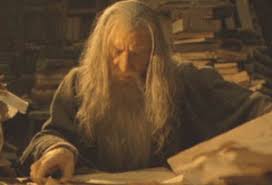
The Numenorian Public Library/ blog is now open for service. I will be listing many of the books I am reading as well as those I have read in the past. I will do my best to answer all requests which are made in a civil and respectful manner, but I have little patience with Orcs or other beasts who may do harm or wish ill-will to those wishing to use this site in order to obtain information or reading material.
-Monty Phair, Librarian
Currently Reading:
Paulo Coelho, Manuscript Found in Accra.
Ian Frazier, Travels in Siberia
-Monty Phair, Librarian
Currently Reading:
Paulo Coelho, Manuscript Found in Accra.
Ian Frazier, Travels in Siberia
Subscribe to:
Posts (Atom)